The Pace of Design: Why Intentional Spaces Begin With Memory
We live in an instant world.
HGTV transforms entire homes in 42 minutes (minus commercials). Netflix delivers movies that were in theaters last month—or decades ago—at the touch of a button. Amazon delivers furniture to your doorstep before you've had time to second-guess the purchase.
Everything is fast. Everything is now. Everything is instant gratification.
Except design.
Real design—intentional design—doesn't work on a television timeline. It doesn't happen in an episode. It can't be rushed, replicated, or reverse-engineered from a screenshot you saw on Instagram.
Because intentional design doesn't start with trends. It doesn't start with what's popular on Pinterest or what that influencer just installed in their renovation.
Intentional design starts with memory.
The Hallway That Shaped Everything
I'm currently designing my own home. And like many designers working on their personal space, I've found myself caught between what I should do (according to trends, timelines, and the pressure to showcase my expertise) and what I want to do (according to my soul).
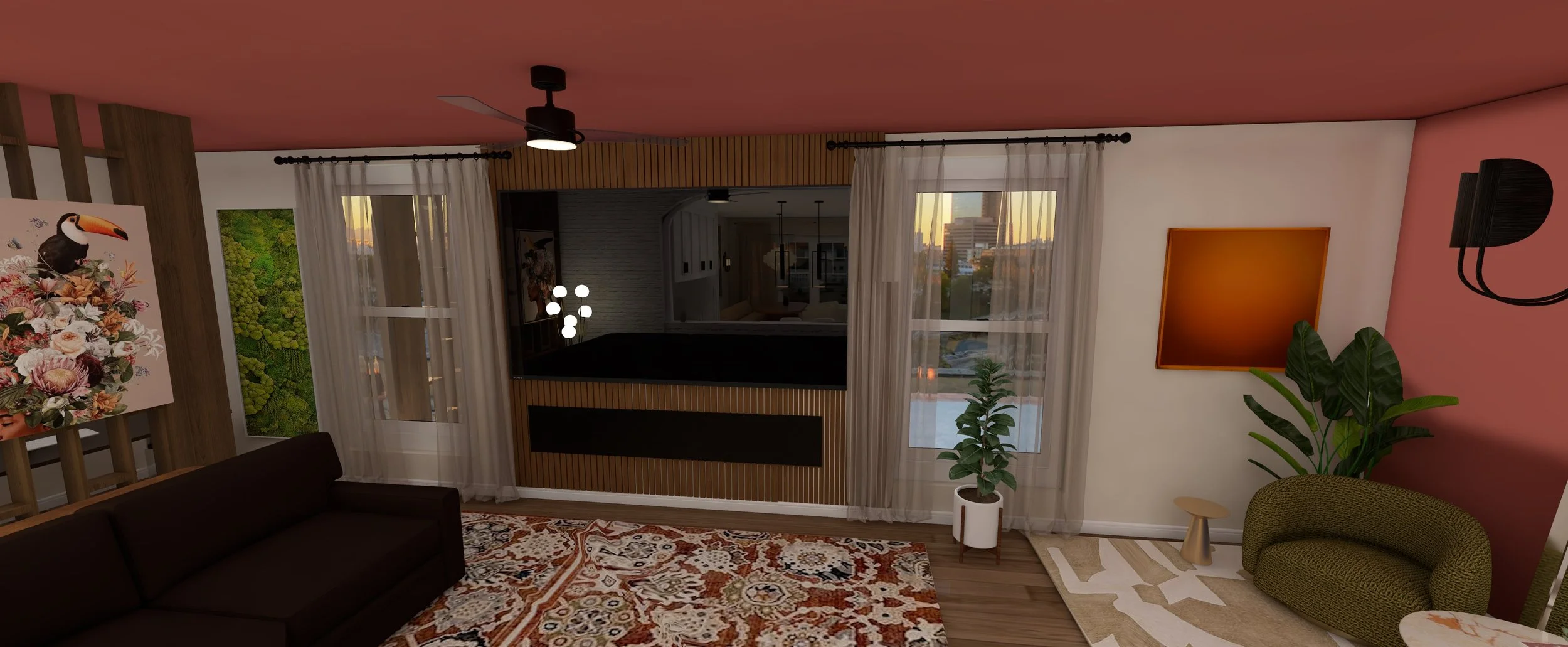
For months, I wrestled with one decision in particular: wood paneling.
I kept seeing it everywhere. Design blogs. Instagram reels. Client inspiration boards. "Everyone's doing wood paneling," I'd think. "Is this just trend-chasing? Am I being influenced by what I'm seeing, or is this actually me?"
Then I stopped. And I asked myself the question I ask every client at the start of a project:
What's your favorite memory of feeling completely at home?
The answer came immediately.
I was five years old, standing in the long hallway of my grandparents' home—the house my parents and I shared with them. That hallway was completely clad in wood paneling. Warm, rich, textured wood that seemed to hold the echo of every conversation, every laugh, every milestone that passed through it.
I remember running down that hallway with my cousins during family gatherings. I remember my grandmother's voice calling us to dinner. I remember my parents standing there, talking with my aunts and uncles while we kids played underfoot. I remember the way the light hit the wood in the afternoon, creating patterns that danced on the walls.
That hallway saw celebrations and family gatherings. It witnessed arguments and reconciliations. It held the ordinary magic of a multi-generational home where life happened fully, messily, beautifully.
That hallway held the safest, most loved version of myself.
And suddenly, wood paneling wasn't a trend I was copying. It was a memory I was honoring. An ode to the old, designed for the new.
This Is What Intentional Design Actually Means
Intentional design isn't about following rules or avoiding trends. It's not about being "original" for originality's sake or rejecting something beautiful just because other people also find it beautiful.
Intentional design is about knowing why.
Why does this color make you feel safe?
Why does this texture invite you to touch it?
Why does this room make you want to linger?
Why does this element feel like you?
When you can answer those questions—when you can trace the thread back to a memory, a feeling, a moment that shaped you—that's when design transcends decoration.
That's when your home becomes a sanctuary rather than a showcase.
The Problem With Instant Design
Here's what television flips and Instagram transformations don't show you:
They don't show the weeks of soul-searching. The mood boards that get scrapped. The moments of sitting with a decision until it feels right rather than just done.
They don't show the process of excavating your own aesthetic—digging past what you think you should like, past what's trendy, past what would photograph well—to find what actually resonates with your bones.
They make it look like you can shortcut that process. Like you can skip the self-knowledge and jump straight to the beautiful result.
But you can't.
Because without the foundation of understanding why you're drawn to certain elements, you end up with a home that looks good but doesn't feel right. A space that's beautifully styled but somehow... empty. Instagram-worthy but not soul-nourishing.
I see it all the time: Clients who've renovated recently but feel disconnected from their own homes. Spaces that look exactly like the inspiration photos but don't feel like the people living in them.
It's the difference between decoration and design.
How to Design Intentionally (Even in an Instant World)
If you're embarking on any design project—a full renovation or just refreshing a single room—here's how to root it in intention rather than impulse:
1. Start With Memory, Not Mood Boards
Before you save a single Pinterest pin, ask yourself:
Where have I felt most at peace?
What spaces from my childhood do I remember fondly?
When have I walked into a room and felt instantly "home"?
What sensory details stick with me? (Textures, smells, sounds, light)
These memories hold clues to your authentic aesthetic. Not what you think you should like. What you actually respond to.
For me, it was that wood-paneled hallway. For you, it might be your grandmother's garden, your college apartment with all those windows, the beach house your family rented every summer, the cozy booth at your favorite restaurant.
Your design aesthetic lives in your memory before it lives in your home.
2. Separate Trend From Truth
It's okay to love something that's trending. But before you commit, ask:
Would I still love this if no one else was doing it?
Does this remind me of something meaningful, or just something I saw recently?
Can I articulate why this speaks to me beyond "it looks good"?
If you can't answer those questions, sit with it longer. True design decisions withstand scrutiny. Trend-chasing collapses under examination.
3. Give Yourself Permission to Take Time
Intentional design operates on a different timeline than instant gratification.
Some decisions come quickly because they're rooted in deep knowing. Others require sitting, considering, living with the question until the answer emerges.
Both are valid. Both are part of the process.
The goal isn't speed. The goal is alignment.
You're not designing for a one-episode reveal. You're designing for decades of living. That deserves time.
4. Honor the "Why" Behind Every Choice
Every element in your home should have a reason for being there—even if that reason is simply "this brings me joy."
Not every choice needs a dramatic backstory. But every choice should feel chosen, not defaulted to.
When you can say, "I picked this because..." and complete that sentence with something true, you're designing intentionally.
An Ode to the Old, Designed for the New
So yes, I'm putting wood paneling in my home.
Not because I saw it on HGTV (though I did). Not because it's having a moment in design circles (though it is). Not because I'm trying to prove I can pull it off (though I hope I will).
I'm installing wood paneling because when I close my eyes and think about what "home" feels like, I'm five years old in that hallway. Surrounded by family. Held by that warm, rich wood. Safe in the knowledge that I belonged exactly where I was.
I'm not copying a trend. I'm continuing a story.
The wood paneling in my home won't look like my grandparents' hallway. It will be updated, refined, designed for how I live now, not how we lived then. But it will carry the essence of what that space meant to me.
It will honor the memory while creating new ones.
That's what intentional design does. It bridges past and present. It honors who you were while celebrating who you're becoming.
It doesn't reject what's popular—it simply asks whether what's popular also happens to be personal.
The Invitation
If you're designing a space right now—whether it's a full home or just one corner—I want to invite you to slow down.
Not because there's virtue in slowness itself, but because the questions that matter take time to answer.
Before you pick the trendy tile or the influencer-approved paint color or the furniture everyone's buying, ask yourself:
What memory am I honoring here?
What part of my story am I continuing?
Why does this matter to me?
Your home is the most personal canvas you'll ever work with. It deserves more than instant gratification.
It deserves intention.